
" "

Blog

7 Best Corundum Mullite Saggar Suppliers for Global Buyers?

A Corundum Mullite Saggar protects ceramic products during high-temperature firing, where heat, repeated kiln cycles, and handling can test its limits. For global buyers, choosing a supplier involves more than comparing prices. Product consistency, technical support, export experience, and clear communication all matter. A saggar that looks suitable on paper may perform differently after repeated use. That detail is easy to miss.

This guide introduces seven suppliers for buyers researching corundum mullite products. It also outlines practical questions to ask before requesting a quotation. Check the stated operating temperature, dimensions, wall thickness, and material specifications. Ask how tolerances are controlled and whether sample testing is available. These details help connect a product description with real kiln conditions. Still, published specifications cannot replace a trial under your own firing schedule. A small test order may reveal issues that a brochure does not.

Supplier information can change, and availability varies by region and order size. So treat any shortlist as a starting point, not a guarantee. Compare written specifications, delivery terms, quality records, and after-sales responses using the same criteria. If a supplier cannot explain a technical claim clearly, pause and ask for evidence. Price matters. But so does service after delivery. The right choice depends on your kiln, workload, and tolerance for downtime. No supplier fits every operation perfectly, and that is worth remembering.
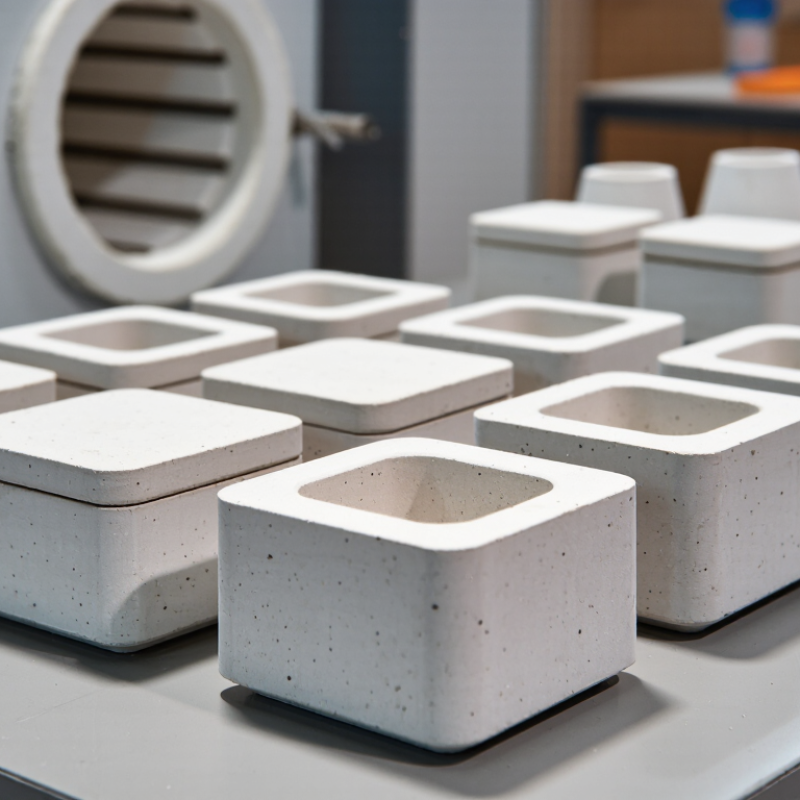
7 Best Corundum Mullite Saggar Suppliers for Global Buyers?

Understanding Corundum Mullite Saggars and Their Industrial Uses

Understanding Corundum Mullite Saggars and Their Industrial Uses

Corundum-mullite saggars are kiln containers used to hold powders or ceramic parts during high-temperature processing. They help limit direct contact with kiln shelves, flame, and airborne debris. Corundum supports hardness and hot strength, while mullite helps maintain structural stability through repeated firing. Heat is unforgiving. Saggar life depends on more than material name: wall thickness, porosity, loading, heating rate, and cooling practice all matter. A small crack can grow during cycling, so visual checks between runs are practical, not optional.

Their uses include technical ceramics and selected powder-calcination processes. The IEA’s Global EV Outlook 2024 reports that energy-sector battery demand reached about 750 GWh in 2023, roughly 40% above 2022. This growth adds pressure on some upstream material-processing lines, but it does not mean every battery plant uses saggars; kiln design and production chemistry vary. The USGS Mineral Commodity Summaries 2024 estimated global alumina production at about 140 million metric tons in 2023, reflecting the scale of the wider alumina supply chain. That figure is not a measure of saggar demand. Buyers should test samples under their own firing schedule, because published specifications rarely capture every real-world thermal shock or loading pattern.

Key Criteria for Evaluating Saggar Suppliers

Evaluating corundum-mullite saggar suppliers requires more than comparing quoted prices. Ask for batch-specific chemical analysis, phase composition, and fired-property results. The USGS Mineral Commodity Summaries 2024 estimated global bauxite mine production at about 400 million metric tons in 2023. That figure reflects upstream scale, not saggar quality; verify the supplier’s raw-material traceability and production controls directly.

Request apparent porosity, bulk density, and water-absorption results, with test methods identified. ASTM C20 covers these measurements for burned refractory brick and shapes. Also check dimensional tolerances, wall thickness, maximum service temperature, and performance under repeated heating and cooling. Small details matter. Ask for data from thermal cycles that match your kiln’s peak temperature, firing atmosphere, load, and cooling rate. A generic test certificate may not represent your actual use.

Inspect sample pieces for uneven edges, pinholes, and cracks before approving a production batch. Confirm how the supplier handles rejected units, replacement lead times, and protective export packaging. For a trial, record saggar weight, dimensions, and visible damage after each firing. A datasheet can still miss real kiln conditions. That gap deserves attention.

Seven Corundum Mullite Saggar Suppliers for Global Buyers

Seven Corundum Mullite Saggar Suppliers for Global Buyers

Global buyers need more than a low quotation. A saggar must withstand repeated firing, thermal shock, and contact with process materials.

The International Energy Agency’s Global EV Outlook 2024 reports that electric-vehicle battery demand exceeded 750 GWh in 2023, up about 40% from 2022. That growth makes reliable kiln furniture increasingly relevant to cathode-material processing. Fit matters.

A practical shortlist can cover seven supplier profiles: high-alumina ceramic specialists, kiln-furniture manufacturers, battery-material process suppliers, custom fabricators, export-focused producers, regional stockists, and engineering-led integrators. Compare their experience with your firing temperature, atmosphere, load, and cycle time.

Ask for evidence. Request technical data for alumina content, bulk density, porosity, and thermal-shock performance. Also ask how dimensions and defect rates are checked between batches.

The IEA also recorded about 14 million electric-car sales in 2023, nearly one in five cars sold worldwide. This is useful demand context, not proof that every supplier can serve battery-material plants.

Ask for samples and trial results using your actual operating conditions. Check lead times, packing, and replacement availability in writing.

The weak point is often batch consistency, not the headline specification. No checklist removes every surprise.

Comparing Product Quality, Customization, and Export Capabilities

Comparing seven corundum mullite saggar suppliers means checking evidence, not just catalog photos. Ask for batch-level data on bulk density, apparent porosity, dimensions, and thermal-cycle performance. Request a sample or test report for the firing temperature and kiln atmosphere you actually use. USGS Mineral Commodity Summaries 2025 estimates 2024 global alumina production at about 140 million metric tons. That figure describes raw-material scale, not saggar quality; suppliers still need to document their own formulations and process controls. A neat brochure is not proof.

Customization matters when kiln shelves, loading patterns, or firing schedules differ. Confirm allowable dimensional tolerances, wall thickness, corner design, and replacement consistency across batches. Ask how the supplier checks cracking and deformation after repeated firing. Export capability is equally practical: review packing photos, moisture protection, pallet strength, shipping terms, and realistic lead times. UNCTAD’s Review of Maritime Transport 2024 reports maritime trade grew 2.4% in 2023 and projected 2% growth in 2024, a reminder that transit planning can affect delivery schedules. Even good products can arrive late.

Tip: Send a drawing, firing temperature, and expected load before requesting a quote. Compare written specifications and sample results across suppliers. If a tolerance is missing, ask. I would not assume “custom” means consistent; that deserves checking.

How to Verify and Select the Right Supplier

Selecting a corundum mullite saggar supplier starts with matching the product to your kiln and firing cycle. Share the operating temperature, heating rate, load weight, and atmosphere. Ask for the stated alumina and silica ranges, dimensions, bulk density, porosity, and the method used for thermal-shock testing. A data sheet should identify the batch, not just describe a typical product. Check whether the supplier can explain how wall thickness and firing affect saggar life. Clear answers matter. So does traceability.

Tips: Request a sample from a normal production batch. Measure its dimensions and inspect the base, corners, and inner surface for cracks or uneven finish. Ask for written inspection records and recent test results. Verify that quoted tolerances match your purchase order.

A sample can perform well while a later batch varies. That is easy to overlook. Before placing a large order, test several units under your own kiln conditions and record cycles, warping, cracks, and contamination. Ask how defects are handled and whether replacement stock is available. Speak with buyers using similar loads, but treat references as one signal, not proof. A video call may show the workshop and packing process, though it cannot replace an on-site audit. Keep a few used saggars for comparison; wear patterns can reveal problems that a first firing will not.

7 Best Corundum Mullite Saggar Suppliers for Global Buyers?

How to Verify and Select the Right Supplier

Use these illustrative weights to compare suppliers—not as measured market data. Verify product performance with technical data sheets and sample testing, and check quality traceability, production capacity, export experience, and after-sales support before making a decision.