
" "

Blog

10 Best Floor Lamps for Home and Office?

Choosing the right Floor Lamp is not only a style decision. It affects comfort, productivity, energy use, and visual health.

The International Energy Agency has estimated that lighting represents about 15% of global electricity consumption. The U.S. Department of Energy also reports that LED lighting uses at least 75% less energy than incandescent lighting. It can last up to 25 times longer. These figures make efficient floor lighting more than a decorative upgrade. It becomes a practical household decision.

Light quality matters too. Mariana Figueiro, a respected lighting researcher and former director of the Lighting Research Center, states, “Light is the most powerful synchronizer of the circadian system.” Her observation supports careful choices for bedrooms, reading corners, and home offices. A warm 2,700K lamp may feel gentle beside a sofa. A cooler 4,000K model can improve focus near a desk, although personal sensitivity differs.

This guide examines ten Floor Lamp options for real homes and working spaces. Each selection considers brightness, color rendering, glare control, stability, adjustability, and energy performance. Products with high color rendering can make wood, fabric, and skin tones look more natural. Weighted bases also matter on busy floors.

No lamp is perfect.

Some models look elegant but offer weak task lighting. Others provide strong brightness but create harsh reflections. Room size, ceiling height, eyesight, and daily routines can change the best choice. The recommendations therefore balance measurable specifications with practical experience, while acknowledging that lighting remains partly personal.
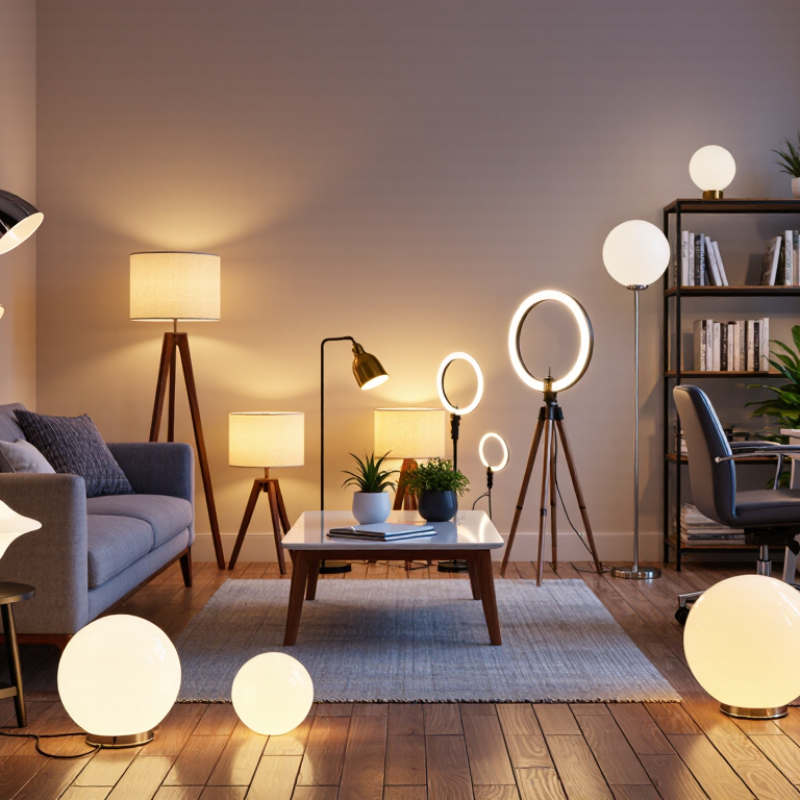
10 Best Floor Lamps for Home and Office?

Floor Lamp Types for Home and Office Use

Floor lamp types can change how a room feels, not just how brightly it shines. A torchiere sends light toward the ceiling, creating soft ambient illumination for living rooms. An arc lamp reaches over a sofa or table without occupying the center space. Its wide curve needs careful placement, though. I once underestimated the walking clearance and moved it after several awkward evenings.

For reading corners, a task or pharmacy-style floor lamp offers focused, adjustable light. Look for a flexible neck, stable base, and shade that limits glare. A swing-arm model works well beside a desk because its reach can change as your chair moves. Tripod lamps add visual interest and spread gentle light through fabric or paper shades. They may feel less practical in narrow offices. Measure the footprint before choosing one.

Bedrooms often benefit from slim reading lamps or adjustable floor lamps beside the bed. A lantern-style lamp can provide warm decorative light, while an uplight with a dimmer supports quiet evening use. In a home office, place the lamp opposite your writing hand to reduce shadows on documents. Keep cords away from chair wheels and walking paths. Color temperature also matters; neutral white light may support detailed work, while warmer light feels calmer after hours. The ideal type depends on ceiling height, furniture scale, and daily habits, not appearance alone.

Key Features for Comparing the Ten Best Floor Lamps

10 Best Floor Lamps for Home and Office?

Comparing ten floor lamps requires more than judging appearance. Start with brightness, measured in lumens. A reading corner often needs about 450–800 lumens, while a larger office may need more. The U.S. Department of Energy reports that LED lighting uses at least 75% less energy than incandescent lighting and lasts up to 25 times longer. Efficiency matters during long workdays. Still, higher output is not always better. Excessive brightness can create glare on screens.

Color temperature affects comfort. Warm light near 2700K feels relaxed, while 3500K–4000K can support focused office work. Look for adjustable settings. A color rendering index of 90 or higher can make paper, fabric, and skin tones appear more natural. The International Energy Agency estimates that lighting represents about 15% of global electricity use. That makes dimming and automatic shutoff practical features, not decorative extras. Very short controls help.

Check the shade design, diffuser, and head angle. A frosted diffuser can soften harsh points, but it may reduce perceived brightness. Weighted bases improve stability beside desks or sofas. Measure the base carefully; narrow feet can tip on thick rugs. Also inspect cord length, switch placement, heat management, and assembly quality. The Occupational Safety and Health Administration emphasizes keeping electrical cords arranged to reduce trip hazards. I would not trust a beautiful lamp with a weak hinge. Specifications can also be incomplete, so hands-on testing remains valuable.

10 Best Floor Lamps for Home and Office? - Key Features for Comparing the Ten Best Floor Lamps

No. Floor Lamp Type Best For Approx. Height Light Output Power Source Color Temperature Key Features Main Limitation Overall Fit
1 LED Torchiere Lamp General room lighting and living rooms 66–72 in 1,800–3,000 lm Integrated LED, 20–30 W 2,700–6,500 K Upward light distribution, dimming, low heat, and efficient operation May create ceiling glare if used at maximum brightness Excellent
2 Adjustable Arc Lamp Sofas, reading corners, and open-plan seating 60–82 in 800–1,500 lm LED or E26 bulb, 8–15 W LED 2,700–3,000 K Long curved arm, wide coverage, and adjustable shade position Large footprint and possible tipping risk without a heavy base Excellent
3 Task Floor Lamp Home offices, desks, crafts, and detailed work 48–65 in 700–1,200 lm Integrated LED, 8–15 W 3,000–5,000 K Focused downward beam, flexible neck, and adjustable head Illuminates a smaller area than an uplight or arc lamp Excellent
4 Pharmacy Floor Lamp Reading chairs and precision tasks 47–60 in 600–1,000 lm Integrated LED or replaceable bulb 2,700–4,000 K Adjustable height, narrow metal shade, and direct task illumination Directional light can feel harsh without diffusion Very Good
5 Tripod Floor Lamp Living-room accent lighting and interiors 55–68 in 500–1,200 lm E26/E27 bulb, typically 8–12 W LED 2,700–3,000 K Stable three-leg base, fabric or metal shade, and decorative appearance Requires more floor space and may cast less task light Very Good
6 Dimmable Reading Lamp Bedside chairs, libraries, and evening reading 48–64 in 500–900 lm LED or replaceable bulb, 6–12 W LED 2,700–3,500 K Warm light, adjustable brightness, and a compact reading head Not designed to light an entire room evenly Very Good
7 Tree-Style Multi-Light Lamp Shared rooms and flexible ambient lighting 58–72 in 900–1,800 lm Three E26/E27 bulbs, typically 6–10 W each 2,700–3,000 K Multiple adjustable heads, separate light directions, and broad coverage Several bulbs increase replacement and energy considerations Very Good
8 Globe Shade Floor Lamp Soft ambient lighting in bedrooms and lounges 50–66 in 400–900 lm E26/E27 bulb, typically 6–10 W LED 2,700–3,000 K Diffused all-around glow, simple control, and low visual contrast Limited beam control for reading or desk work Good
9 Smart LED Floor Lamp Connected homes, offices, and programmable lighting 55–70 in 1,000–2,000 lm Integrated LED, 15–25 W 2,700–6,500 K App or voice control, schedules, dimming, and tunable white light Requires compatible network equipment and software support Very Good
10 Industrial Metal Floor Lamp Workspaces, studios, and modern interiors 55–70 in 600–1,300 lm E26/E27 bulb, typically 8–12 W LED 2,700–4,000 K Durable metal construction, directional shade, and replaceable bulb Metal shades may produce sharper shadows than fabric shades Good

Specifications are typical ranges for comparable floor-lamp designs. Actual brightness, dimensions, bulb compatibility, controls, and color-temperature options may vary by model.

Top Floor Lamps for Living Rooms and Shared Spaces

The 10 best floor lamps for living rooms and shared spaces balance useful light, comfort, and safe placement. An arc lamp can brighten a sofa without blocking a walkway. A tripod lamp adds warmth near a reading chair. Slim pole lamps work well beside desks, cabinets, or media units.

Look for adjustable heads when one room serves several purposes. Downward light supports reading, while softer upward light reduces glare during conversations. A lamp with a dimmer helps shared spaces feel calmer at night.

Choose warm white bulbs around 2700K to 3000K for living rooms. For office corners, a neutral white bulb may improve visual focus.

Soft light helps.

Stability matters more than decorative shape. Check the base on a hard floor and test the switch from a seated position. Keep cords away from entrances and avoid placing lamps behind frequently moved chairs. I once chose a narrow lamp with a beautiful finish, but its base tipped too easily. That choice was not perfect. A heavier base would have served the room better. Inspect heat clearance around fabric shades, especially in busy offices. A simple design often performs best when furniture, screens, and people share limited space.

Best Floor Lamps for Home Offices and Work Areas

A well-chosen floor lamp can make a home office feel calmer and more practical. For focused work, place it beside the desk, not directly behind the monitor. This reduces harsh reflections on the screen. An adjustable arm helps aim light at notebooks, keyboards, or paperwork. Keep the base outside the main walking path.

The U.S. Department of Energy reports that LED lighting uses at least 75% less energy than incandescent lighting and lasts up to 25 times longer. That makes an LED floor lamp a sensible choice for long workdays. Look for dimming control and replaceable parts when possible. I once selected a lamp for its appearance alone. Its narrow beam created a bright desk and a gloomy room. That was a poor choice.

For office tasks, EN 12464-1:2021 commonly references 500 lux for general desk work. A lamp should support this level without producing glare. Use a fabric or frosted diffuser for softer distribution. Neutral white light, around 3500K to 4000K, usually keeps text clear without feeling overly cold. Personal preference still matters.

Check the lamp at night before buying several. Shadows can appear differently on wood, white paper, and matte screens. The International Energy Agency’s Energy Efficiency 2023 report identifies efficient lighting as a proven way to reduce electricity demand. Still, efficiency cannot fix uncomfortable positioning. A modest lamp in the right place may outperform an expensive-looking one.

10 Best Floor Lamps for Home and Office

Compare typical recommended illuminance levels for common home-office and work-area lighting needs. Higher lux values indicate a stronger task-lighting requirement.

Values show typical target illuminance ranges used in lighting guidance: ambient areas generally need less light, while reading, drafting, and detailed computer work require more focused illumination. Actual results depend on lamp height, shade design, room size, and surface reflectance.

How to Choose, Position, and Maintain a Floor Lamp

10 Best Floor Lamps for Home and Office?

How to Choose, Position, and Maintain a Floor Lamp

Choose a floor lamp by task, not appearance alone. A reading corner usually needs focused, adjustable light, while an office needs wider, even illumination. EN 12464-1 specifies 500 lux for many reading and writing areas. At home, softer lighting may feel better, but dim light can cause eye strain. I often misjudge brightness in stores. Test the lamp beside your actual chair or desk.

Position the lamp slightly behind your shoulder. This reduces shadows on a book or keyboard. Keep the shade below eye level to limit glare. Avoid placing it directly behind a monitor, where reflections quickly become distracting. For warmer rooms, choose about 2700–3000K. Offices often suit 3500–4000K. The U.S. Department of Energy reports that LED lighting uses at least 75% less energy and lasts up to 25 times longer than incandescent lighting.

Maintenance takes only a few minutes. Unplug the lamp before cleaning it. Dust the shade and vents with a dry microfiber cloth. Check the cord for cracking, loose plugs, or unusual heat. Replace damaged parts instead of improvising repairs. I sometimes forget to clean the lower shade, where dust visibly dulls the light. That small detail matters. Recheck the lamp’s position after rearranging furniture. A perfect setup can become uncomfortable overnight.