
What Are the Best Floral Wallpaper Styles for 2026?
Choosing Floral Wallpaper for 2026 is less about chasing a single trend and more about finding a pattern that suits the room. A leafy mural can make a quiet bedroom feel immersive, while small-scale blossoms may soften a narrow hallway. Large, painterly blooms create a confident focal point. Vintage-inspired roses bring a familiar, layered mood. There is no universal winner.
This guide explores styles likely to remain appealing, including oversized botanicals, delicate ditsy prints, dark romantic florals, and loose, abstract designs. It also considers how color, repeat size, lighting, and paper finish affect the result. A sample can look calmer in a bright showroom than it does beside a north-facing window. Test it at home. Check the pattern against existing furniture and trim, too. Practical details matter: washable finishes may suit busy spaces, while textured papers can be less forgiving around corners. Even a beautiful print can feel overwhelming if the scale is wrong. That part is easy to underestimate. The recommendations focus on observable design qualities and everyday use, not promises that one look will suit every home. Use them as a starting point, then judge the pattern in your own light.
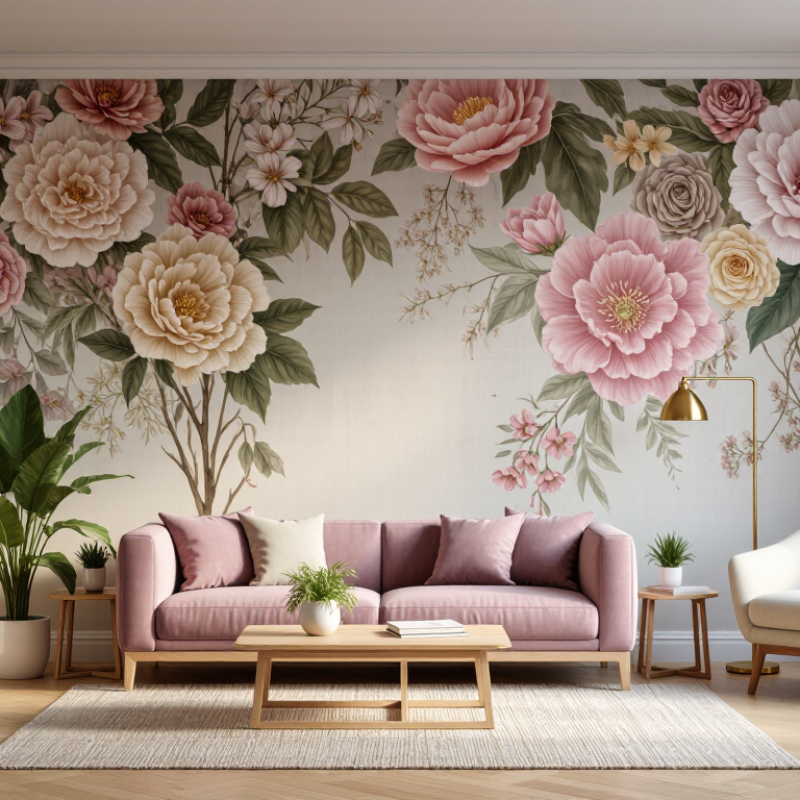
Key Design Features Shaping Floral Wallpaper in 2026
In 2026, floral wallpaper is less about tiny, evenly repeated blooms and more about scale, texture, and mood. The strongest designs make a clear choice: oversized garden flowers, delicate archival-style stems, or loose, painterly petals. Large motifs can give a plain bedroom wall a focal point, while smaller prints often feel gentler in a narrow hallway. Keep nearby furniture simple. Small rooms need balance. Less can help.
A second defining feature is a softer, more tactile finish. Matte surfaces and lightly distressed details create depth without making the pattern feel glossy or overly polished. Some papers pair flowers with faint stripes, sketch marks, or shaded backgrounds. These details look appealing in samples, but inspect them from a few steps away. Lighting changes everything. A print that seems calm in a bright showroom may look busy under a warm bedside lamp.
Color is becoming more nuanced, too. Muted olive, dusty blue, warm clay, and faded rose sit comfortably beside natural wood and linen. For a restful room, choose a ground color close to the wall or bedding; for more contrast, let the flowers carry one stronger shade. One caution: dramatic blooms can overpower a small space when repeated on every wall. Try a sample behind a door or beside a window before committing. It may still surprise you. That is useful.

Major Floral Wallpaper Styles to Consider in 2026
For 2026, floral wallpaper is moving across several distinct looks rather than one fixed trend. Oversized botanical prints suit rooms with clear sightlines: broad leaves and loose petals can make a small powder room feel immersive. Painterly florals offer softer edges, like brushwork on plaster, while vintage-inspired designs bring repeat patterns and faded, archival colors. For a calmer effect, choose small-scale blooms on a light ground. They work well in hallways, where a busy pattern is seen in passing.
Color and scale matter. Deep backgrounds with cream or rust-colored flowers create a cocooning feel in bedrooms, but can make dim rooms feel smaller. Test a sample beside the actual trim and check it in morning and evening light. A report by Grand View Research estimated the global wallpaper market at about $1.83 billion in 2023, with projected growth from 2024 to 2030. That figure describes the market, not floral preferences; it cannot prove which print will lead in 2026. Still, it reflects continued demand for wallcoverings. A practical choice is a pattern that suits the room’s light and furnishings, not just a trend image. Sometimes, the sample looks different on the wall.
How Floral Pattern Scale and Color Affect a Room
For 2026, floral wallpaper is less about choosing a fashionable flower and more about matching pattern scale to the room. Large blooms create a confident focal point, especially on one wall behind a bed or dining table. In a narrow hallway, though, oversized petals can feel crowded. Smaller, repeating sprigs usually read as quieter, but may look busy when packed tightly. Test a sample at eye level, then view it in morning and evening light. Scale changes with distance.
Color shapes the room’s mood and apparent brightness. Cream backgrounds with soft green leaves keep detail visible without making a dim room feel heavier. Deep blue or burgundy florals add richness, but need enough light and calmer furnishings nearby. A 2023 Grand View Research wallpaper market report valued the global market at about US$1.8 billion in 2022 and projected 3.5% annual growth through 2030. That signals a substantial market, not proof that one floral style suits every home. A useful, slightly imperfect rule: if the sample dominates from the doorway, try a smaller print or softer contrast. Lights matter, too.
Choosing Floral Wallpaper for Different Interior Spaces
Floral wallpaper can change how a room feels, but the right pattern depends on light, scale, and daily use. In a small entryway, try a fine botanical print with a pale background; it can add detail without making the walls feel crowded. Check a sample beside the door at different times of day. Colors often look cooler in morning light.
Bedrooms can handle softer, larger blooms, especially behind a bed where the pattern has room to breathe. In a busy kitchen or family room, washable wallpaper and a restrained design may be more practical. Look at the wall from across the room, not only up close. That part is easy to miss. A pattern that seems delicate on a sample may feel loud across four walls.
Bathrooms need extra care. Moisture and ventilation matter, so confirm that the wallpaper is suitable for the space and follow installation guidance. For a narrow powder room, a darker floral can feel inviting, though it may make the room seem smaller. I would test one panel before committing; even careful planning cannot predict every visual effect. Let the pattern work with existing tile, wood, and fabric rather than asking it to match every detail.
What Are the Best Floral Wallpaper Styles for 2026? — Choosing Floral Wallpaper for Different Interior Spaces
| Floral style | Visual characteristics | Best-suited spaces | Color and scale guidance | Practical considerations |
|---|---|---|---|---|
| Oversized botanical | Large leaves and expressive blooms create a bold, immersive feature wall. | Living rooms, dining rooms, and bedroom headboard walls. | Use a limited palette and larger motifs in spacious rooms; choose a softer background to keep the look balanced. | Works best when furniture and accessories leave some visual breathing room around the pattern. |
| Small-scale vintage floral | Fine, repeating blossoms evoke traditional prints and add gentle pattern across a room. | Bedrooms, reading nooks, cottage-style rooms, and powder rooms. | Muted greens, dusty pinks, cream, or pale blue suit a calm, layered scheme. | Check a sample in the room: dense repeats can appear busier under strong lighting or across large walls. |
| Painterly floral | Brushstroke-like petals and blended colors give the design an artistic, less formal feel. | Living areas, bedrooms, and creative workspaces. | Choose colors that echo existing textiles or artwork; medium-to-large motifs make a clear focal point. | Pair with simple furnishings to avoid competing patterns and keep the room visually composed. |
| Minimal line-art floral | Fine outlines, open space, and restrained detail create a light, contemporary impression. | Hallways, small bedrooms, home offices, and compact apartments. | Neutral backgrounds with one or two ink colors help maintain an airy look. | A subtle repeat can complement plain furnishings without making a narrow space feel crowded. |
| Tropical foliage and blooms | Layered leaves and vivid flowers bring a lively, high-contrast botanical look. | Dining areas, sunrooms, entryways, and accent walls. | Deep greens and warm accents suit well-lit rooms; use fewer competing colors in smaller spaces. | Balance energetic prints with natural textures and solid-color furnishings. |
| Soft, tonal floral | Low-contrast flowers blend into the background for a subtle, textured effect. | Bedrooms, nurseries, guest rooms, and calm living spaces. | Closely related shades—such as warm white and beige or sage and pale green—keep the pattern understated. | A good option when you want floral character without a strong visual focal point. |
Wallpaper Materials, Finishes, and Practical Considerations
Floral wallpaper in 2026 ranges from loose, oversized blooms to tiny, closely spaced prints. The material matters as much as the pattern. Nonwoven wallpaper is often easier to hang and remove than traditional paper, while vinyl-coated options can handle occasional wiping. Check the product’s cleaning guidance; “washable” does not mean scrub-proof. Samples matter. Tape a large one near a window and view it in morning and evening light. A pale rose can look peachy at sunset.
Finish changes the effect. Matte surfaces soften painterly flowers and hide small wall flaws, though they may be less forgiving in busy kitchens or hallways. A gentle sheen can reflect light, but it may also highlight uneven plaster.
For bathrooms, confirm that the wall covering suits the room’s moisture level and that ventilation is adequate. Small rooms need restraint. A large botanical print can feel airy when its background stays light, but it can overwhelm a narrow wall.
Measure the repeat before ordering, since matching motifs creates more waste than a plain design. Peel-and-stick wallpaper may simplify a small project, yet textured walls can weaken adhesion. It is easy to underestimate prep; clean, smooth walls take time, and skipping that step can show at every seam.

