What Is the Best Outdoor Storage Cabinet in 2026?
Choosing the best Outdoor Storage Cabinet in 2026 means looking beyond color and price. A cabinet beside a grill must handle rain, sun, and frequent opening. One tucked under a covered patio may face very different conditions. Small details matter: door alignment, raised feet, drainage, and shelves that do not sag under heavy pots.
Industry reports offer useful context, but not a cabinet-by-cabinet verdict. Grand View Research estimated the global outdoor furniture market at $52.2 billion in 2023 and projected 5.6% annual growth from 2024 to 2030. That figure covers a broad category, not outdoor storage cabinets alone. It signals demand for outdoor living products, but cannot prove which cabinet will last longest. Check materials, warranty terms, assembly guidance, and real-world user feedback.
Landscape architect Thomas Church’s often-cited principle, “Gardens are for people,” is a useful reminder: outdoor storage should make everyday use easier. A good cabinet keeps cushions dry, tools close, and walkways clear. But no product is maintenance-free. Even resin can fade, and metal hardware can corrode in harsh conditions. This guide compares capacity, weather resistance, stability, and value, while noting where specifications leave unanswered questions. The best choice depends on your climate, available space, and what you plan to store.
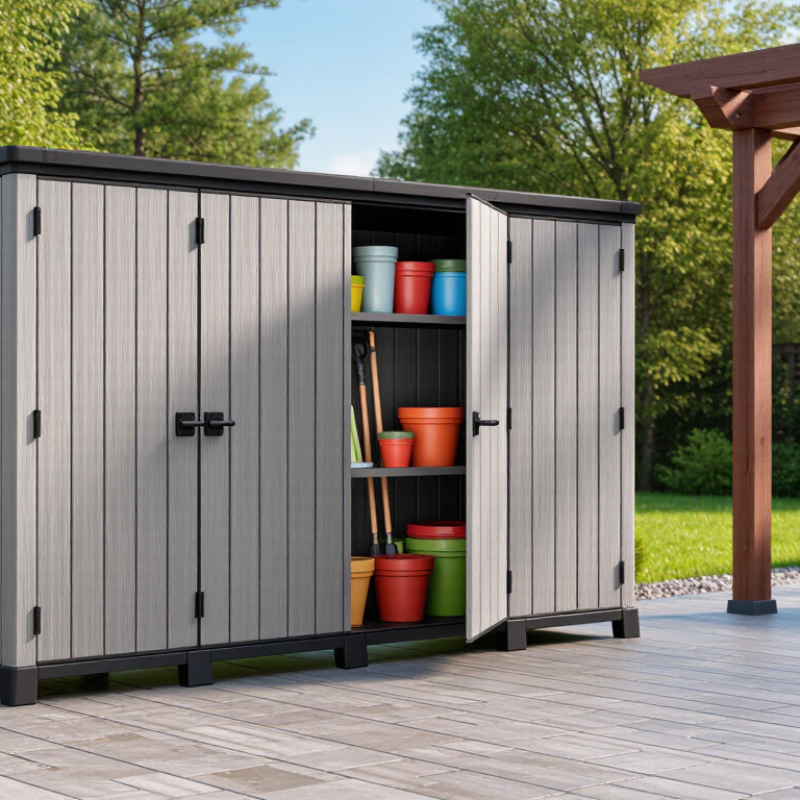
What an Outdoor Storage Cabinet Is and What It Stores
An outdoor storage cabinet is a compact, enclosed unit designed to keep household and garden items outside but protected from sun, rain, and dust. Unlike an open shelf, it has doors and solid sides that help reduce weather exposure. It is not fully weatherproof by default, though. Materials, seals, and placement all affect how well it protects belongings.
Common contents include hand tools, plant pots, watering cans, cushions, and small bags of soil. A larger cabinet may hold folding chairs or outdoor toys, while a narrow model can fit beside a patio wall. Keep damp items separate from dry ones, and avoid storing anything that could leak or attract pests. Check the interior dimensions, shelf strength, ventilation, and door clearance before choosing a cabinet. A crowded cabinet is hard to use, even when its listed capacity looks generous.
Tips: Place the cabinet on a level, raised surface, and leave space around it for airflow. Store heavier items low. Check the latch and roof after storms; small gaps can matter. I’d avoid assuming that “weather-resistant” means completely dry inside.
Materials and Design Features That Shape Durability
An outdoor storage cabinet is only as dependable as its materials and the way its parts fit together. UV-resistant resin handles rain without rust, though thin panels can flex in strong wind. Galvanized steel offers firmer walls, but scratched coatings may expose metal to moisture. Aluminum resists corrosion and stays relatively light. Solid wood looks warm, yet it needs regular sealing and closer attention to damp corners.
Small design details matter. A sloped roof helps rain run off instead of pooling above the door. Raised feet keep the base clear of wet paving, while a slight floor slope can guide stray water outward. Check hinges, handles, and fasteners; sturdy panels are less useful when the door sags. A tight overlap and simple weather seal can limit splashes, but they should not trap condensation. Ventilation helps. So does shade.
Before choosing, consider what the cabinet will hold and where it will sit. A level patio, an exposed deck, and a damp garden edge create different demands. Anchor points can reduce movement in gusts, although installation takes extra care. One detail is easy to underestimate: access. If shelves leave no room for a watering can or folded chair, good construction will not make the cabinet convenient. Durability is partly material, partly maintenance, and partly whether the design suits daily use.
Choosing a Cabinet for Your Outdoor Space and Storage Needs
Choosing a cabinet starts with the space, not the product label. Measure the ground area, door swing, and path from the house. Measure twice. A cabinet beside a narrow patio door may look roomy online but block the walkway in real life. Think about what you’ll store: tall tools need height, while cushions need broad, easy-to-reach shelves.
Outdoor conditions matter. Check whether the cabinet will sit in direct sun, exposed rain, or a damp corner. Look for weather-resistant materials, sturdy hinges, and doors that close evenly. Rain finds gaps. Raised feet can help keep the base away from puddles, while ventilation may reduce trapped moisture. If you plan to store heavy items, confirm the shelves can support their weight; thin panels can bow over time.
Convenience is easy to underestimate. A wide door is useful, but only if it can open fully against a fence or wall. Consider whether shelves can be adjusted, and whether the cabinet needs anchoring on a windy site. A larger cabinet offers flexibility, yet it can dominate a small yard and invite clutter. I’d leave a little spare room inside, though that space can become a dumping spot if everything goes in without a plan. Choose a size that fits both your belongings and the way you move through the space.
Installation, Care, and Long-Term Performance in 2026
A durable outdoor storage cabinet starts with a careful installation. Choose a level surface where rainwater drains away, rather than collecting beneath the base. Leave a little clearance from fences and walls so air can circulate and doors can open fully. Check the ground with a level before assembly; a slight tilt can make doors bind over time. Small details matter. Follow the cabinet’s assembly instructions, and secure it as directed, especially in exposed or windy locations. If the instructions are unclear, pause rather than forcing a panel or fastener.
Care is mostly routine. Rinse off dust and pollen with water and mild soap, then let the cabinet dry. Avoid harsh cleaners that may damage its finish. Every few months, inspect hinges, handles, seals, and fasteners for looseness or wear. Clear leaves from the base and keep stored items from pressing against the doors. This takes minutes, not hours.
Long-term performance depends on the site and what goes inside. Store heavy items low and spread their weight across the floor. Keep damp cushions or tools dry before putting them away; trapped moisture can lead to odors and surface damage. Seasonal temperature changes may loosen fittings, so check them periodically. Even with good care, colors can fade and parts may need adjustment. That is not necessarily a failure, but it is worth noticing early.