
" "

Blog

7 Best Wood Cutting Board Set Suppliers for Global Buyers

Selecting a reliable Wood Cutting Board Set supplier requires more than comparing prices. Global buyers must examine material quality, manufacturing consistency, food-contact safety, and export reliability. A polished product photo cannot reveal warped edges, uneven oiling, or weak packaging. Real evaluation begins with samples.

This guide introduces seven suppliers serving international buyers and compares their practical strengths. Each supplier is considered through product range, wood options, customization ability, minimum order quantities, lead times, and communication quality. Details such as rubber feet, juice grooves, board thickness, and handle finishing can influence both customer satisfaction and return rates. Supplier documentation also matters, including material declarations, quality procedures, and applicable testing records. These records should be verified rather than accepted without questions.

Experience shows that a low quotation may hide higher shipping costs or inconsistent batch quality. Small differences matter. A board that arrives cracked cannot support a strong retail reputation. However, supplier performance can change with production schedules, material availability, and order volume. No ranking should replace direct sampling and factory communication. That is an important limitation.

The comparison aims to give purchasing teams a clearer starting point. It balances visible craftsmanship with less obvious supply-chain risks. Buyers can use the findings to shortlist candidates, request comparable quotations, and prepare focused inspections. Careful decisions take time. Yet, that time often protects margins, delivery promises, and long-term customer trust.
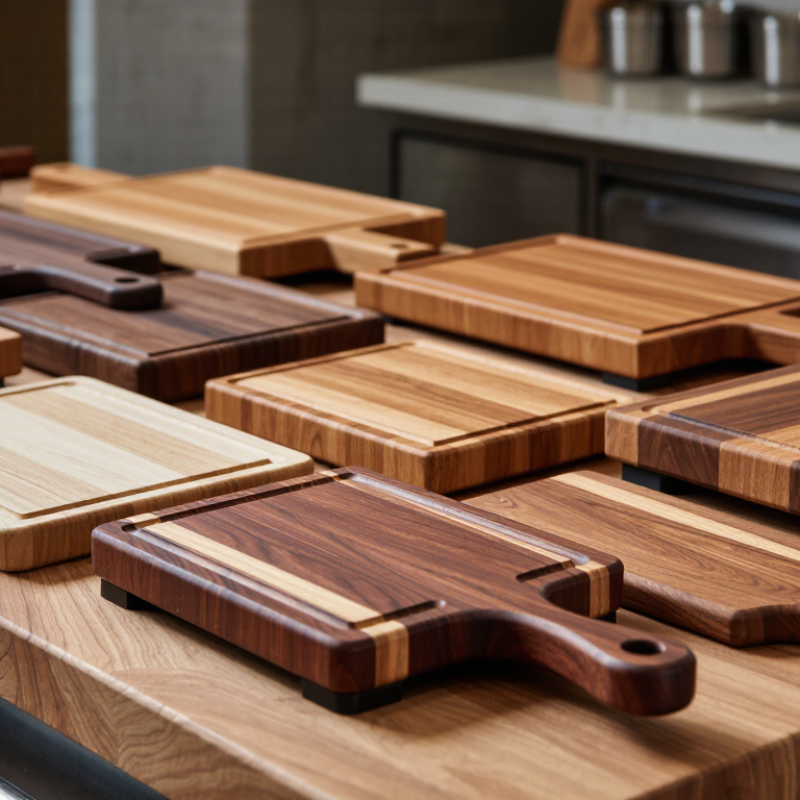
7 Best Wood Cutting Board Set Suppliers for Global Buyers

What Makes a Wood Cutting Board Supplier Suitable for Global Buyers

A suitable wood cutting board supplier must prove more than attractive product photos. Global buyers need stable quality across samples, repeat orders, and different shipping seasons.

Ask for wood species, moisture range, board thickness, glue details, and edge-finishing methods. Kiln-dried hardwood should arrive without deep cracks, strong odors, or excessive warping.

Request a production sample. Then inspect it after washing and drying. That small test often reveals weak sealing or uneven sanding.

Reliable suppliers provide batch records, inspection photos, packing specifications, and honest lead-time estimates.

They should explain how materials are sourced and how defects are handled. Traceable timber documentation and applicable food-contact testing add confidence for importers.

Do not accept vague claims. Ask whether cartons resist moisture during container transport and whether pallets suit your destination.

Clear communication matters when dimensions change by only a few millimeters. Small errors can affect retail packaging.

Samples should match mass production, although this is not guaranteed without written inspection criteria.

Pricing deserves careful review.

An unusually low quote may exclude inner packaging, testing, tooling, or port charges. Compare the full landed cost, not only the unit price.

Suppliers serving global buyers should offer flexible order quantities without hiding surcharge rules. Fast replies help, but accurate replies matter more.

I would also check replacement policies before placing a large order. No supplier is flawless.

A minor color variation may be acceptable, while a contaminated surface is not. Define both points before production begins.

Seven Leading Wood Cutting Board Set Suppliers and Their Strengths

7 Best Wood Cutting Board Set Suppliers for Global Buyers

Seven Leading Wood Cutting Board Set Suppliers and Their Strengths

Global buyers need more than attractive grain and low prices. Grand View Research reported that the global kitchenware market could grow at about 4.5% annually from 2024 to 2030. That growth increases pressure on suppliers to prove quality, capacity, and responsible sourcing. The strongest seven supplier types include integrated hardwood factories, FSC-certified exporters, OEM specialists, bamboo processors, artisan workshops, volume consolidators, and premium end-grain manufacturers.

Integrated factories offer stable dimensions and direct production control. FSC-certified exporters provide clearer forest-traceability documents. OEM specialists support custom logos, packaging, and retail-ready sets. Bamboo processors usually deliver lighter products and competitive pricing. Artisan workshops create distinctive hand-finished surfaces, though output can vary. Volume consolidators simplify mixed-container purchasing for distributors. Premium end-grain makers provide excellent durability and visual appeal, but their prices and lead times are higher.

Food-contact safety still requires careful verification. The U.S. FDA Food Code recognizes properly maintained wood as suitable for many food-contact surfaces. Buyers should request material declarations, moisture-control records, edge-sealing details, and migration-test documentation. Supplier audits should also examine sanding quality, glue specifications, carton strength, and replacement policies. Samples can reveal hidden issues quickly: rough corners, uneven feet, or a strong chemical smell.

No supplier is perfect. I have seen attractive samples fail during repeated washing. That lesson matters. Some suppliers also provide impressive certificates without clear batch coverage. A reliable purchasing decision should compare recent production samples, inspection results, and corrective-action speed, not only catalog photos.

Materials, Craftsmanship, Product Range, and Customization Options

Global buyers should inspect wood species, not only polished product photographs. The FAO Global Forest Resources Assessment 2020 records about 4.06 billion hectares of forest worldwide. That figure does not prove responsible sourcing. Ask suppliers for wood origin, chain-of-custody records, and moisture-control procedures. The USDA Forest Products Laboratory explains that wood expands and contracts with changing humidity. Poorly dried boards may warp beside a sink. Acacia, beech, maple, and walnut offer different hardness, grain, color, and price points. End-grain construction can protect knife edges, but it usually costs more and needs careful maintenance.

Craftsmanship should be visible in details. Look for tight joints, even sanding, stable feet, rounded edges, and food-contact-safe finishes. The FDA Food Code 2022 emphasizes smooth, durable, and easily cleanable food-contact surfaces. Suppliers should provide finish specifications, cleaning instructions, and test documentation. Product range matters too. A capable factory may offer serving boards, butcher blocks, bread boards, trays, and utensil sets. Custom options can include dimensions, juice grooves, handles, packaging, barcodes, and laser markings. Request a physical sample before approving a large order. Photos can hide rough edges. I have seen attractive samples fail during humid transit, so packaging deserves equal attention. A supplier’s customization promise may still need clearer limits, especially for small quantities and complex shapes.

7 Best Wood Cutting Board Set Suppliers for Global Buyers

Materials, Craftsmanship, Product Range, and Customization Options

Janka hardness measures the force required to embed a standard steel ball halfway into wood. Higher values generally indicate better resistance to dents and surface wear, while final cutting-board quality also depends on grain orientation, drying, food-safe finishing, construction, and customization requirements.

Reference: Typical Janka hardness values for commonly used board woods, reported in pounds-force (lbf); values may vary by species, grade, moisture content, and growing conditions.

MOQ, Pricing, Certifications, Packaging, and International Shipping

7 Best Wood Cutting Board Set Suppliers for Global Buyers

A strong supplier should offer clear MOQ, stable pricing, and repeatable quality. For standard sets, MOQs often range from 100 to 500 units. Custom shapes or engraved logos may require higher quantities. Request a sample before approving bulk production. I have seen attractive samples fail because the final boards used thinner wood. Do not rely on photographs alone.

Pricing depends on wood species, thickness, edge treatment, accessories, and labor. Basic sets may cost about $6 to $15 per set, while premium hardwood sets can exceed $25. Ask whether pricing includes individual boxes, export cartons, and inland transport.

Certification records also need careful review. Depending on the market, buyers may request FSC documentation, food-contact test reports, or applicable FDA and LFGB compliance evidence. Verify the certificate holder, testing scope, and expiry date. Paperwork can be incomplete.

Packaging should prevent moisture, scratches, and corner damage. Good suppliers use inner sleeves, moisture-resistant cartons, and reinforced outer cases. Plastic-free options may support sustainability goals, but they can increase damage risk.

Shipping quotes should state the Incoterm, port, lead time, and destination charges. For wooden export crates, confirm ISPM 15 treatment when required. Sea freight usually lowers unit cost, but delays can affect seasonal sales. Air freight is faster and expensive.

A written inspection plan, batch photos, and carton drop testing add useful control. Mistakes still happen. Build time for rework.

How Global Buyers Can Compare Suppliers and Place Orders Safely

When comparing seven wood cutting board set suppliers, global buyers should inspect more than product photos. Request samples from each supplier and check board thickness, edge smoothness, warping, odor, and surface finish. Ask for the exact wood species, moisture-control method, and care instructions. Food-contact safety should be supported by clear test reports, not vague claims.

Small details matter.

Compare material consistency across samples. A board with uneven grain may crack after repeated washing. Confirm set contents, dimensions, weight, logo options, packaging strength, and minimum order quantity in writing. Suppliers should provide production timelines, quality checkpoints, export documents, and clear trade terms. A video factory tour can help, but it does not replace independent inspection.

Order safely by using staged payments linked to approved samples and inspection results. Avoid choosing only by the lowest quotation. A cheap unit price can hide weak cartons, high defect rates, or expensive replacement shipping. Ask how defects are handled and record acceptable tolerance levels before production. One practical warning is easy to miss: packaging designed for local delivery may fail during long ocean transport. Request a drop-test sample and review carton photos before shipment. Even careful buyers can overlook small changes between the sample and bulk order, so retain signed specifications and inspect randomly before final payment.