
How to Choose the Best Travel Playard for Your Baby?
Choosing a Travel Playard is not just a matter of comparing folded size or fabric colors. It means finding a sleep and play space that suits your baby, your trips, and your daily routine. The Centers for Disease Control and Prevention reports about 3,400 sudden unexpected infant deaths each year in the United States, many during sleep. That figure does not mean a playard prevents every risk. It does show why sleep setup deserves careful attention.
Rachel Y. Moon, MD, FAAP, a pediatrician and coauthor of American Academy of Pediatrics safe-sleep guidance, is associated with this clear recommendation: “The safest place for an infant to sleep is on a firm, flat, noninclined surface designed for infant sleep.” For shoppers, that means checking the specific model’s manual, sleep-surface instructions, and current safety notices—not relying on a product photo or a reassuring label alone. The U.S. Consumer Product Safety Commission also provides recall information for families to check before buying or using nursery products.
Small details matter. A narrow doorway, a crowded trunk, or a mattress that does not fit correctly can change how practical a model feels. This guide will compare portability, setup, stability, cleaning, and age or weight limits, while keeping safe-sleep guidance in view. One caveat: no single “best” Travel Playard fits every family, and product descriptions can make differences look smaller than they are. A little skepticism helps. Read the instructions, inspect the parts, and choose for the trips you actually take.
Understanding What a Travel Playard Is and How It Is Used
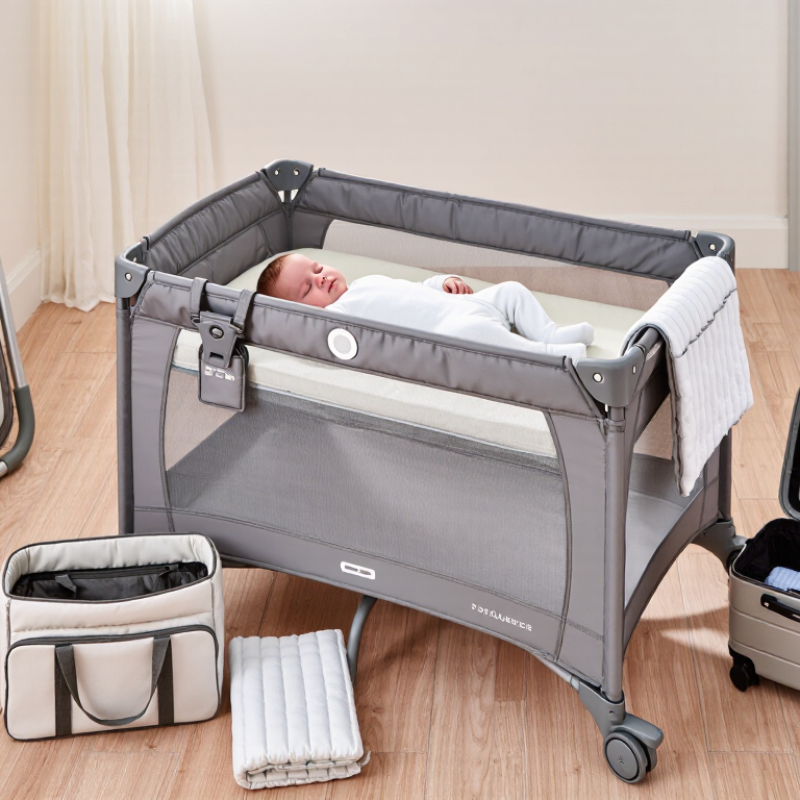
A travel playard is a portable, enclosed space where a baby can play or rest while an adult stays nearby. Most have a folding frame, mesh sides, and a floor pad. They are different from strollers: playards are designed for a stationary space, not for moving a baby around. Small details matter.
Families may use one in a hotel room, at a relative’s home, or in another room during daily routines. Set it on a level, dry surface, then check that the frame is fully open and locked. Keep the baby in view, and follow the playard’s instructions for age, weight, and intended use. For sleep, use it only if the product is designed for that purpose. Avoid adding mattresses or soft bedding unless the instructions specifically allow them.
A playard can create a familiar spot, but it does not make an unfamiliar room childproof. Check the surrounding area for cords, reachable objects, and unstable furniture. Before traveling, practice folding and opening the playard at home; the first setup can feel awkward. Compare folded size and weight with your vehicle and storage space, not just the product’s open dimensions. Not magic, though. A careful setup and close supervision still matter.

Identifying Your Baby’s Age, Size, and Travel Needs
A baby’s age is only a starting point when choosing a travel playard. Check the product’s stated age range, weight limit, height limit, and instructions for when a child can climb out. Babies grow at different rates, so compare your child’s current measurements with the limits, not just the label’s age estimate. The CDC growth charts track weight and length from birth through early childhood; they can help families follow growth over time, but they do not replace the playard’s own limits. A few centimeters can matter.
Think about the trip, too. A compact, lighter frame may suit train journeys or small hotel rooms, while frequent car travel may make folded dimensions and setup time more important. Picture opening it beside a bed, with enough space to walk around it. It is easy to overpack. Still, a familiar sleep space can make an unfamiliar room feel less chaotic.
The American Academy of Pediatrics’ 2022 safe-sleep policy notes that about 3,500 infants die from sleep-related causes each year in the United States. That figure is not a measure of playard safety; it underscores why caregivers should use only a firm, flat sleep surface and follow the product instructions. Check the limits again as your baby grows.
Checking Safety Standards, Stability, and Sleep Features
When comparing travel playards, check that the model meets safety requirements where you live. Read the permanent label and current instruction manual, not just the product description. A clear model number helps if you need to check a recall later. Look for secure locking mechanisms and inspect seams, mesh, and frame connections for damage. A polished appearance alone tells you very little.
Stability matters on real floors, not only showroom surfaces. Set the playard on a flat, firm area and lock every joint as directed. Press gently on the sides; the frame should not fold or rock unexpectedly. Check that the feet sit evenly and the mesh stays taut. Keep it away from stairs, cords, and dangling window coverings. This sounds obvious, but setup can get rushed.
For sleep, use only the mattress or pad supplied or specified by the manufacturer. Extra padding may create gaps, even when it looks more comfortable. Keep the sleep space bare, and follow the manual’s guidance on sleep use and age or weight limits. Confirm that any raised bassinet setting is intended for your baby’s current stage. One trade-off: a lighter frame may be easier to carry, yet feel less reassuring on an uneven floor. Try the locking steps at home before your first trip.
| How to Choose the Best Travel Playard for Your Baby? — Checking Safety Standards, Stability, and Sleep Features | ||
|---|---|---|
| What to Check | Reliable Standard or Practical Check | Why It Matters |
| Safety certification and labeling | For use in the United States, look for a play yard that complies with the applicable CPSC requirements in 16 CFR Part 1221. Check the product label and instructions, and confirm that the model has not been recalled. | Compliance requirements address hazards such as structural failure, entrapment, and unsafe openings. Requirements differ by country, so verify the rules where the playard will be used. |
| Frame and locking system | Set up the playard exactly as instructed. Confirm that every rail and locking mechanism is fully engaged, the frame is not bent, and the floor is secure before placing the baby inside. | A partly locked or damaged frame may collapse or create an unsafe gap. Never use a playard with broken, missing, or improvised parts. |
| Stability on the floor | Place the playard on a firm, level surface. Check that all feet or support points rest evenly on the floor and that the unit does not rock, tip, or shift during normal use. | Uneven or unstable placement can increase the risk of tipping or an unsafe sleep setup. Do not use it on a bed, table, or elevated surface. |
| Mesh, openings, and seams | Inspect the mesh, stitching, and attachment points for tears, loose threads, detached sections, or openings. Keep the playard away from cords, window-blind strings, and other strangulation hazards. | Damaged fabric or accessible cords can create entrapment or strangulation hazards. |
| Sleep surface | For infant sleep, use only a playard identified by its manufacturer as suitable for sleep. The sleep surface should be firm, flat, and level, with the supplied pad used as directed. | A firm, flat sleep surface supports safer sleep practices. Do not use an inclined or altered surface for routine infant sleep. |
| Mattress and bedding | Use only the mattress or pad supplied or specifically approved for that playard. Do not add a separate mattress, topper, pillow, comforter, or padded liner. | Extra padding can leave gaps or create a soft surface that may increase the risk of suffocation or entrapment. |
| Age, size, and weight limits | Follow the exact limits and developmental-use instructions on the product label and in the manual. Stop using the playard when the child reaches a stated limit or can climb out. | Limits vary among models and attachments. A bassinet or changing accessory may have different restrictions from the playard itself. |
| Setup and folding | Choose a model whose setup steps you can follow reliably. Before each use, confirm the frame is fully open and locked; when folding, keep the baby away from moving parts. | Correct assembly is essential to stability and safe operation. A compact fold is useful for travel, but should not replace a complete setup check. |
| Care and ongoing checks | Follow the manufacturer’s cleaning and maintenance instructions. Recheck locks, hinges, fasteners, fabric, and the sleep pad after travel and before each use. | Repeated folding, transport, or cleaning can reveal wear or damage. Discontinue use if any part is broken, loose, or missing. |
| Important: Always follow the current product instructions and local safety requirements. For infant sleep, place the baby on their back on the playard’s approved, firm, flat surface, and keep the sleep space clear of loose bedding and soft objects. | ||
Comparing Portability, Setup, Materials, and Cleaning
How to Choose the Best Travel Playard for Your Baby?
Compare folded size and weight, but test the packed playard in your car before buying. A lighter frame is easier to carry through an airport, yet it may feel less stable on uneven ground. Check that the frame locks securely and that one adult can set it up without forcing a joint. Practice at home. A rushed setup in a dim hotel room is no fun.
Materials affect comfort and cleanup. Look for breathable mesh, smooth seams, and a firm, flat mattress designed for that playard. Avoid adding extra padding. The American Academy of Pediatrics recommends a firm, flat sleep surface, while CDC data recorded about 3,700 sudden unexpected infant deaths in 2022. That figure is not a playard-specific risk estimate, but it underlines why sleep setup matters. For spills, removable, washable fabrics can help; check care labels, since some parts need spot-cleaning only. I’d still inspect seams after washing. Fabric can wear.
Tips: Open and close the playard twice before a trip. Pack a small cloth for quick wipe-downs, and confirm every latch clicks. Small detail, big relief.
Matching Playard Options to Your Budget and Travel Routine
A travel playard should fit your routine, not just your budget. For occasional car trips, a lighter model that folds quickly may be worth paying more for. Check its folded dimensions against your trunk, then practice opening it at home. Small frustrations show up fast. If you fly often, compare packed weight and carrying handles, but remember that lighter frames may offer fewer storage features. I would not choose by weight alone; I once underestimated how awkward a bulky carry bag feels through a busy terminal.
For regular visits to relatives, a sturdier, lower-cost option may make sense if it stays mostly in one place. AAA projected that 70.9 million people would travel 50 miles or more from home during the 2024 July 4 period, a reminder that peak travel can mean crowded cars and tight packing space. Choose a folded size that leaves room for a diaper bag and other essentials. Before buying, check current safety notices and follow the product instructions. The American Academy of Pediatrics recommends a firm, flat sleep surface without soft bedding; use the playard’s intended mattress and keep pillows and loose blankets out. Comfort matters, too. A playard that is hard to set up may stay unused, even if its price looks right.

