
" "

Blog

Top 10 Short Tumbler Glasses for Wholesale Buyers

Wholesale buyers need short tumblers that balance durability, usable capacity, and a price that works at scale. A Short Tumbler Glass may serve water at breakfast, juice in a café, or a neat pour at a hotel bar. Small differences matter. A heavy base can feel reassuring, while an oversized rim may not suit every service setting.

Market research helps frame the category, but buyers should read the details carefully. Grand View Research’s Glass Tableware Market analysis tracks market size, product segments, and regional trends. UN Comtrade records international trade in glassware under HS 7013, offering useful context for sourcing and trade flows. These sources do not tell a buyer whether a specific glass survives repeated commercial washing. That still requires supplier specifications, sample testing, and clear checks on dimensions, weight, packaging, and breakage terms.

This top 10 guide compares short tumbler options for wholesale purchasing, with attention to shape, glass clarity, stackability, and practical use. Some choices may look similar in a catalogue. They can feel quite different in the hand. We also consider the limits of available product information; not every listing publishes comparable test results. A shortlist is useful, but it is not proof of performance. The right glass depends on service style, storage space, reorder consistency, and the everyday handling your staff can realistically manage.
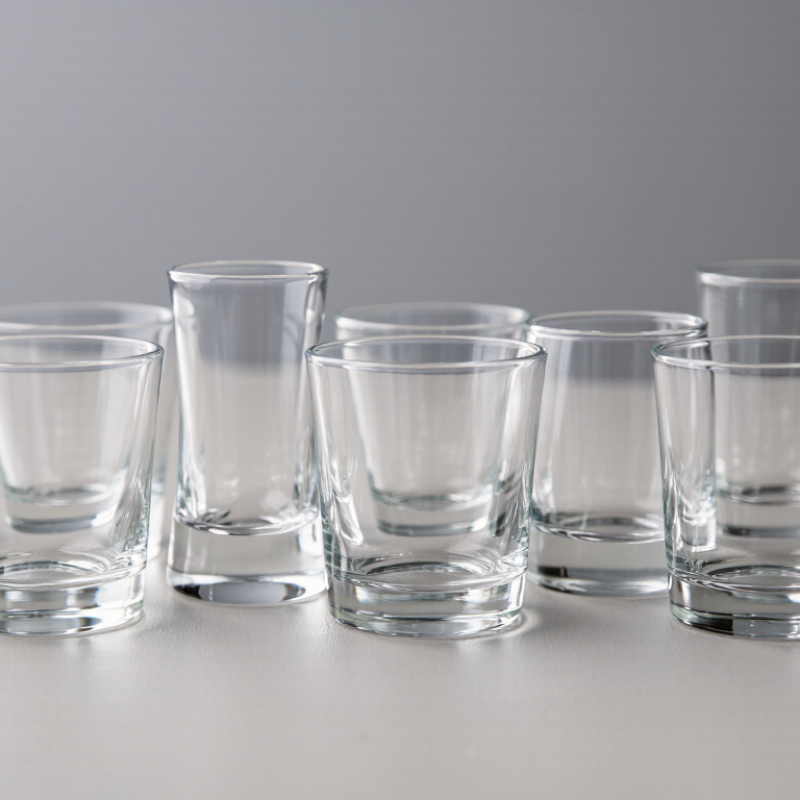
Top 10 Short Tumbler Glasses for Wholesale Buyers

What Defines a Short Tumbler Glass in Wholesale Buying

A short tumbler is a low-profile drinking glass, generally wider than it is tall and easy to handle at a table. Wholesale catalogs do not share one standard height or capacity. No universal cutoff exists. Buyers should compare measurements rather than rely on the product label alone. Many styles hold roughly 6 to 12 ounces, but dimensions and usable volume vary.

For bulk purchasing, check height, rim diameter, base width, and weight together. A broad base can feel stable on a busy service counter, while a thick rim may affect comfort and perceived quality.

Capacity matters, too. A glass listed as 10 ounces may hold less in practical service when staff leave room for ice or a mixer. That detail matters. Ask for a sample and assess it with the intended pour, not just an empty-glass photo.

Short tumblers can suit water service, juice, or compact cocktail portions, depending on the buyer’s use case. For storage, confirm whether the shape is stackable; not every low glass nests safely.

Also review carton packing and sample handling before committing to a large order. Buyers sometimes focus too heavily on price per piece. It is an easy mistake. A small difference in weight, fit, or breakage rate can matter more across repeated shipments.

Key Features and Materials to Compare

When comparing short tumbler glasses for wholesale, look beyond capacity and appearance. A 250 ml glass may feel compact on a café table, while a thicker base can make the same size seem heavier and more stable. Check rim thickness, clear capacity markings, and whether the shape is comfortable to hold. Small details matter.

Soda-lime glass is common and often cost-effective, but thickness and finish vary between suppliers. Borosilicate glass generally tolerates temperature changes better, though that does not make it impact-proof. Tempered glass can offer added strength, yet it may still break if dropped. Ask for material specifications and test samples in a dishwasher or with typical serving temperatures before placing a large order. Not every sample behaves alike. Also compare stackability, since tightly nested glasses can stick or chip during handling. Review carton dividers and breakage terms; attractive glassware is a poor value if it arrives damaged. There is no perfect choice, and buyers sometimes give too much weight to price while overlooking replacement costs.

Ten Short Tumbler Styles for Wholesale Buyers

Short tumblers vary in shape, weight, and feel. For wholesale buyers, ten practical styles offer different ways to serve drinks and suit varied shelves. Straight-sided tumblers look clean and are easy to print on. Rounded rocks glasses feel comfortable in the hand. Faceted designs catch light and add grip. Stackable tumblers save storage space, a useful detail for busy cafés. Heavy-base glasses feel steady on a table. Small details matter.

Ribbed tumblers add texture without changing the basic silhouette. Tapered lowball glasses narrow toward the base and fit neatly in the hand. Colored-glass styles bring a muted tint to a display, though color consistency should be checked across samples. Etched tumblers offer a subtle pattern that can hide light marks. Double-wall versions provide a layered look, but their extra construction may affect cost and packing. Not always. Compare capacity, rim thickness, weight, and carton protection before choosing a style. A striking sample can disappoint if it chips easily or arrives poorly packed. Ask suppliers for dimensions and sample units, then check how each glass feels when filled and washed.

Top 10 Short Tumbler Styles for Wholesale Buyers

Typical nominal capacities are shown in US fluid ounces. These are representative sizes; actual capacities vary by design and manufacturer.

How to Match Tumbler Designs to Customer Needs

Top 10 Short Tumbler Glasses for Wholesale Buyers
How to Match Tumbler Designs to Customer Needs

A short tumbler should fit the way customers actually drink. Cafés serving iced coffee may prefer a wider opening for ice and easy cleaning. Restaurants often need sturdy, stackable shapes that save shelf space during busy shifts. For homeware retailers, a clear, simple profile can suit many kitchens. Small details matter. Check the glass’s weight, rim thickness, and base stability; these affect how it feels in the hand and performs in daily use.

Match capacity to the drink, not just the display. A compact 250-milliliter glass works for juice or spirits, while a larger size may suit water and mixed drinks. Buyers should also consider dishwasher use and storage height. Ask suppliers for samples, then test stacking and handling on a real shelf. It is easy to overlook awkward rims when reviewing a product photo.

Appearance still counts. Textured sides can improve grip and add visual interest, though heavy patterns may make cleaning harder. Some customers want a classic straight wall; others prefer a rounded silhouette. Neither choice is universally better. I would compare a few shapes with the intended users, because a design that looks elegant online can feel surprisingly bulky in person. Sampling takes time, but guessing can leave buyers with stock that does not suit their customers.

Top 10 Short Tumbler Glasses for Wholesale Buyers - How to Match Tumbler Designs to Customer Needs

No. Tumbler Design Typical Capacity Approx. Height Common Glass Type Best-Fit Customers and Uses Wholesale Buying Consideration
1 Classic straight-sided lowball 8–10 oz (237–296 ml) 3.5–4 in (8.9–10.2 cm) Clear soda-lime glass Restaurants, bars, and homeware retailers seeking a versatile everyday glass for water, juice, or spirits. A broadly useful shape that is easy to merchandise and typically stacks or stores efficiently, depending on the design.
2 Heavy-base rocks glass 9–11 oz (266–325 ml) 3.5–4.25 in (8.9–10.8 cm) Clear soda-lime glass Bars, hotels, and gift retailers serving customers who prefer a substantial-feeling glass for cocktails or spirits. Check unit weight and carton weight, as a thick base can increase shipping costs and handling requirements.
3 Faceted geometric tumbler 8–10 oz (237–296 ml) 3.5–4 in (8.9–10.2 cm) Clear or lightly tinted soda-lime glass Home décor shops, casual dining venues, and buyers looking for a decorative table setting. Review the pattern and edge finish for consistency, especially when ordering large quantities for matched sets.
4 Ribbed tumbler 8–10 oz (237–296 ml) 3.5–4.25 in (8.9–10.8 cm) Clear soda-lime glass Cafés, lifestyle retailers, and hospitality buyers seeking added texture and a more secure-feeling grip. Confirm that the rib pattern is easy to clean and that the glass fits the buyer’s storage and washing setup.
5 Colored glass lowball 8–10 oz (237–296 ml) 3.5–4 in (8.9–10.2 cm) Color-treated soda-lime glass Gift shops, restaurants, and retailers building coordinated color collections or seasonal tableware assortments. Ask whether color is integrated into the glass or applied as a surface treatment, and verify care instructions.
6 Stackable short tumbler 7–9 oz (207–266 ml) 3.25–3.75 in (8.3–9.5 cm) Clear soda-lime glass Busy cafés, catering operations, and compact kitchens where storage space is limited. Check the manufacturer’s stacking guidance and test whether nested glasses separate easily without sticking.
7 Wide-mouth juice tumbler 6–8 oz (177–237 ml) 3–3.5 in (7.6–8.9 cm) Clear soda-lime glass Hotels, breakfast venues, and retailers catering to customers who want a compact glass for juice or small servings. Compare mouth diameter and capacity to serving portions; shorter designs may require more shelf space per unit.
8 Rounded-barrel tumbler 9–11 oz (266–325 ml) 3.5–4 in (8.9–10.2 cm) Clear soda-lime glass Bars and casual dining businesses looking for a comfortable grip and a softer, curved silhouette. Check the widest diameter against standard shelves, trays, and glass racks before confirming a bulk order.
9 Vintage-style pressed-glass tumbler 8–10 oz (237–296 ml) 3.5–4 in (8.9–10.2 cm) Pressed soda-lime glass Restaurants, event venues, and homeware shops seeking a patterned look for casual or retro-inspired settings. Inspect the design’s relief and rim finish, and request samples to assess clarity and perceived weight.
10 Minimal tapered tumbler 8–10 oz (237–296 ml) 3.5–4.25 in (8.9–10.8 cm) Clear soda-lime glass Modern cafés, hotels, and retailers that favor clean lines and a simple, adaptable tableware style. Compare top and base diameters to confirm compatibility with drinkware trays, shelves, and existing collections.
Specification note: Capacities and dimensions shown are typical market ranges for short tumblers, not guaranteed specifications. Exact measurements, glass composition, dishwasher suitability, stacking limits, and packing details vary by product and supplier; confirm them with a sample and product specification sheet before placing a wholesale order.

Wholesale Considerations for Pricing, Packaging, and Supply

Wholesale buyers should compare short tumbler glasses by usable capacity, weight, and finish, not appearance alone. A glass that looks compact online may feel bulky in hand. Request samples and check rim smoothness, base stability, and how easily each size fits a standard shelf. Small details matter. Confirm the quoted price includes any required inner dividers, protective cartons, and printed packaging.

Pricing depends on order quantity, glass thickness, packing method, and shipping volume. Ask suppliers to separate unit costs from tooling, packing, and freight estimates. Compare like with like. A low unit price may not be the best value if cartons arrive with frequent breakage. Request carton dimensions and photos of the packed product, then clarify how damaged units are documented. These checks cannot remove every risk, but they make costs easier to assess.

Supply reliability deserves equal attention. Ask about minimum order quantities, production lead times, sample approval, and reorder consistency. For a first purchase, a smaller trial order can reveal differences in clarity, weight, or fit before a larger commitment. It may cost more per glass. Still, that trade-off can be sensible when demand is uncertain. Confirm what happens if production dates shift, and keep written specifications for the next order. I would not assume a repeat shipment will match perfectly without checking.