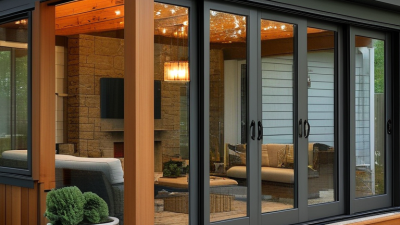
2026 Top Types of Sliding Patio Doors for Global Buyers
In 2026, Sliding Patio Doors are becoming central to brighter, more flexible residential spaces worldwide. Buyers now expect wide views, smooth movement, and dependable weather protection. Yet appearance alone cannot define a successful door. A slim aluminum frame may look elegant, but it can transfer heat without a suitable thermal break.
This guide examines leading types for global buyers, including standard two-panel sliders, multi-panel systems, lift-and-slide doors, pocket doors, and framed glass-wall designs. Each option serves a different purpose. A coastal home may need corrosion-resistant hardware and laminated glass. A cold-climate property may require low-emissivity glazing, insulated frames, and tested air seals. In a compact apartment, a pocket system can save valuable floor space, though its concealed track demands careful installation.
Details matter. Really matter. An experienced buyer should compare opening size, glass specification, threshold height, drainage, security hardware, and replacement-part availability. Performance ratings should be verified through recognized testing, not accepted from attractive brochures. Local building requirements, wind exposure, solar heat, and installer skill can change the best choice completely.
No door is perfect. Even a premium system may develop alignment problems when the wall opening settles or the track collects grit. That practical weakness deserves attention, not marketing language. Reliable suppliers explain maintenance schedules, warranty limits, lead times, and installation responsibilities clearly. With those checks in place, the right Sliding Patio Doors can connect indoor comfort with outdoor living while supporting long-term value.
2026 Door Taxonomy: Sliding, Lift-and-Slide, Multi-Slide, and Bi-Fold
2026 Top Types of Sliding Patio Doors for Global Buyers
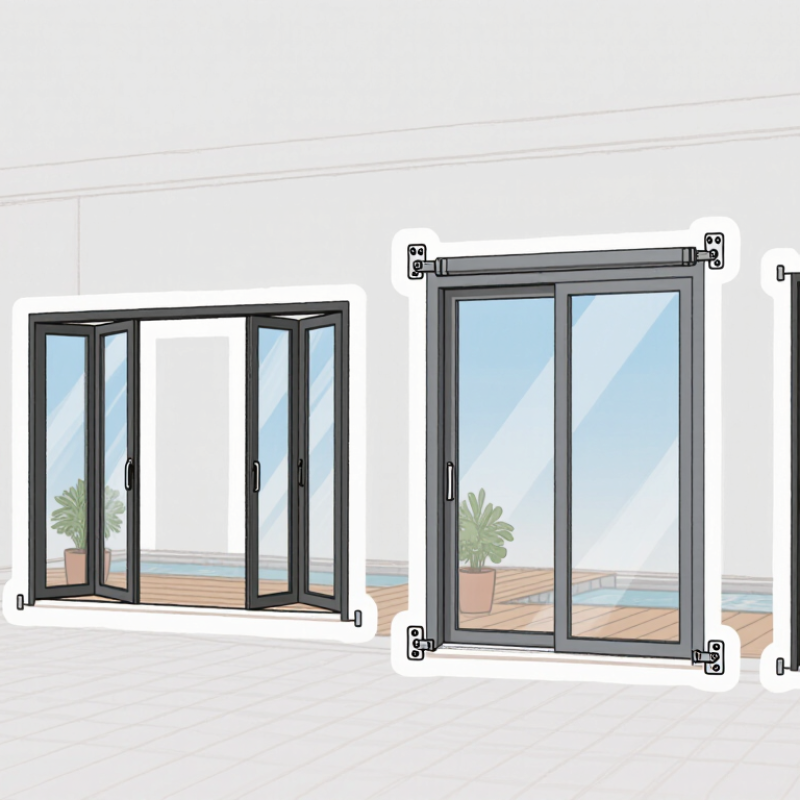
The 2026 door taxonomy is clearer: sliding, lift-and-slide, multi-slide, and bi-fold systems serve different openings.
Standard sliding doors move on tracks and suit compact patios. They offer practical ventilation, but their fixed panels limit the clear opening.
Lift-and-slide doors use a handle-operated mechanism to raise heavy panels before movement. This reduces friction and supports larger glass sizes. They need accurate installation and strong structural support.
Multi-slide doors stack several panels beside one another. They create wide openings for terraces, restaurants, and modern homes. However, pocket walls require careful waterproofing and maintenance access.
Bi-fold doors fold into sections, producing an almost complete opening. Their threshold design affects drainage, accessibility, and indoor comfort.
I have found that buyers often focus on glass area first. That can be a costly mistake. Frame strength, roller quality, wind exposure, and thermal performance matter just as much.
Tips:
Measure the finished opening, not the rough opening. Check local requirements for safety glazing, wind loads, water resistance, and energy performance. Ask for tested air, water, and structural data. Inspect the track sample before ordering. A low threshold looks elegant, but poor drainage can create trouble. Leave service clearance where possible. Door selection is never purely visual.
Panel Systems Compared: 2-Track, 3-Track, Pocket, and Corner-Opening Designs
2026 Top Types of Sliding Patio Doors for Global Buyers
Panel Systems Compared: 2-Track, 3-Track, Pocket, and Corner-Opening Designs
A 2-track sliding door uses one fixed panel and one moving panel. It suits compact patios and keeps hardware relatively simple. Its opening is limited, but daily operation is usually predictable. A 3-track system adds another panel and creates a wider clear opening. It can improve ventilation and movement between indoor and outdoor areas. However, more panels mean more rollers, seals, and alignment points.
Pocket doors slide into a wall cavity and nearly disappear when open. They create a clean view, but installation demands accurate structural planning. Moisture control inside the pocket is easy to underestimate. Corner-opening designs remove two meeting walls of glass, producing a dramatic, open corner. They need careful support design, especially in windy regions or taller buildings. A beautiful corner can become a maintenance problem if drainage is weak.
Tips: Check the wall depth before choosing a pocket system. Ask for tested air, water, and wind data. Confirm panel weights, roller access, and replacement parts. In humid climates, inspect drainage paths closely. For colder regions, compare thermal breaks and glass performance. A larger opening is not always better. I have seen attractive layouts lose comfort because afternoon sun was ignored. Measure furniture paths, too. Small mistakes remain expensive.
NFRC Metrics Explained: U-Factor, SHGC, VT, and Air Leakage Ratings
2026 Top Types of Sliding Patio Doors for Global Buyers
NFRC metrics help buyers compare sliding patio doors beyond frame appearance. U-factor measures heat transfer through the complete door assembly. Lower values generally mean better insulation. SHGC measures how much solar heat enters through the glass. In hot climates, a lower SHGC can reduce indoor heat and cooling demand. In cooler regions, moderate solar gain may support winter comfort. The U.S. Department of Energy estimates that windows account for 25–30% of residential heating and cooling energy use. Patio doors deserve attention.
Visible transmittance, or VT, indicates how much daylight passes through the glazing. Higher VT can brighten a living room, but glare may become uncomfortable beside pale flooring. Air leakage is rated in cubic feet per minute per square foot. Lower leakage means fewer drafts and less conditioned air loss. The NFRC label reports these values under standardized testing, helping buyers compare products across markets. Still, test results are not the whole installation.
Tips: Check the rating for the exact glass, frame, size, and operating panel. A fixed panel may perform better than the sliding panel. Ask for local climate guidance and installation details. DOE guidance also warns that poor sealing can weaken real-world efficiency. I have seen excellent ratings perform poorly after careless shimming and unfinished perimeter seals. A low U-factor cannot repair a visible gap.
Glass and Frame Performance: Double vs. Triple IGUs and Thermal Breaks
2026 Top Types of Sliding Patio Doors for Global Buyers
Glass and Frame Performance: Double vs. Triple IGUs and Thermal Breaks
Sliding patio doors lose performance through both glass and frames. The U.S. Department of Energy reports that windows can cause 25–30% of residential heating and cooling energy use. For buyers, this makes the whole-door rating more useful than center-glass claims.
Double insulated glass units usually provide strong value in moderate climates. With low-emissivity coatings, argon filling, and warm-edge spacers, they can reach roughly 1.1–1.6 W/m²K glass U-values. Triple IGUs may reach about 0.5–0.8 W/m²K, depending on cavity width and coating design. These ranges reflect technical data from the International Glazing Database and passive-building research, not a guaranteed product result.
Triple glass is not automatically better. It adds weight, frame depth, hardware load, and often higher transport emissions. A weak aluminum frame can still create cold edges, even with excellent glass. Thermal breaks reduce this bridge by separating interior and exterior metal paths. NFRC rating guidance correctly emphasizes whole-product U-factor, solar heat gain, air leakage, and visible transmittance.
Details matter more than sales language. Check Uw, not only Ug. Ask for certified test reports. A thermally broken frame with double IGUs may outperform an unbroken frame with triple glass. Installation remains the uncomfortable variable. Even a high-rated door can underperform when the sill is poorly sealed or the opening is out of square.
2026 Top Types of Sliding Patio Doors for Global Buyers
Glass and Frame Performance: Double vs. Triple IGUs and Thermal Breaks
The chart compares representative whole-door U-factor benchmarks in W/m²·K. Lower values indicate better thermal insulation. Triple insulating glass units (IGUs) generally reduce heat transfer compared with double IGUs, while thermally broken aluminum frames perform substantially better than non-thermally broken aluminum frames. Actual results vary by door size, spacer, gas fill, low-emissivity coating, frame design, and certified testing conditions.
Indicative industry performance values for comparison purposes; certified product data should be verified using the applicable regional test standard.
Global Compliance Benchmarks: FGIA, ASTM E283/E330/E331, and 32-Inch Clear Openings
For global buyers, sliding patio doors should be compared by tested performance, not appearance alone. Common options include two-panel, three-panel, lift-and-slide, and pocket systems. Each design changes the frame size, operating force, drainage path, and usable opening.
FGIA guidance helps teams define performance, materials, hardware, and installation expectations. ASTM E283 measures air leakage through the assembled door. ASTM E330 evaluates structural performance under controlled pressure. ASTM E331 checks resistance to water penetration. These tests are connected, but they are not interchangeable. A door may pass one test and still need improvement elsewhere. That detail is often missed.
A 32-inch clear opening refers to the actual unobstructed passage, not the nominal panel width. Handles, rollers, interlocks, and frame stops can reduce it. Measure the opening with the active panel fully opened. Check the installed condition, not only the factory drawing. This matters for homes, hotels, and accessible routes across different markets. Local requirements may vary, so confirm the project’s adopted rules before production. In field reviews, small measurement errors have caused expensive revisions. The specification looked complete. It was not.
For coastal or high-wind projects, request documented E330 pressure ratings and suitable water-management details. For humid regions, examine E331 results and sill drainage. Testing is valuable, but installation quality still matters. A certified-looking report cannot correct an uneven threshold. That remains a practical weakness in many procurement plans.
Related Posts
-
How Much Does Sliding Patio Door Installation Cost in 2026?
-
Mastering International Trade Certification for Best Sliding Glass Door Installation: A Step-by-Step Guide
-
The Ultimate Guide to Achieving the Best Sliding Glass Door Installation for Your Home
-
Envisioning the Future of Sliding Glass Door Replacement: Innovations and Trends Ahead
-

10 Best Window Replacements for Global Buyers
-

Top 10 Dog Doors for Sliding Glass Doors from Leading Chinese Manufacturers at the 137th Canton Fair