
" "

Blog

What Is a Red Light Therapy Panel?

A Red Light Therapy Panel is a device that emits specific red and near-infrared wavelengths toward the skin. Unlike a small handheld tool, it usually covers a wider area, such as the face, shoulders, or legs. The panel may contain rows of light-emitting diodes behind a protective screen. When switched on, it produces a warm glow, but it should not feel painfully hot.

The science behind red light therapy concerns how cells respond to light energy. Researchers have studied wavelengths commonly used for skin appearance, wound care, and muscle recovery. However, results can vary with wavelength, distance, treatment time, skin condition, and device quality. A professional explanation must avoid promising dramatic changes. Evidence is developing, not magical.

In practical use, a person may sit several inches from the panel for a programmed session. Protective eyewear may be recommended, depending on the device and manufacturer’s instructions. Clean skin, consistent scheduling, and realistic expectations matter. Yet, convenience can hide important details. Some products provide limited technical information, making comparison difficult. Check irradiance, wavelength ranges, safety certifications, warranty terms, and independent testing where available. A qualified healthcare professional can help assess whether light therapy suits your needs, especially with photosensitive conditions or medication use. Personal experience can be useful, but it is not the same as clinical evidence. This guide explores how panels work, what their specifications mean, and where caution remains necessary. Expect practical information, not guaranteed results.
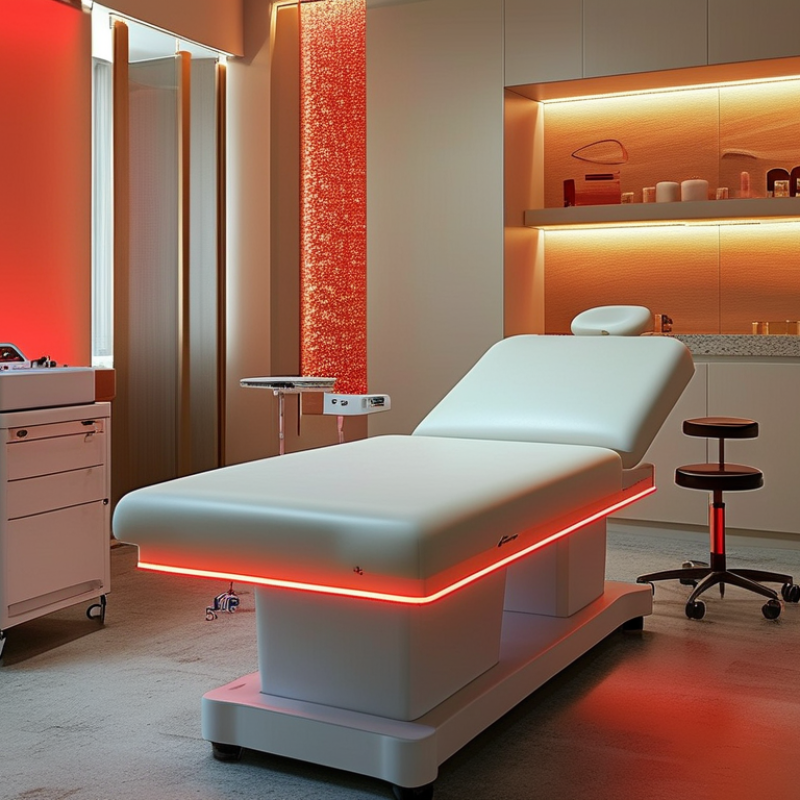
What Is a Red Light Therapy Panel?

Definition and Basic Function of a Red Light Therapy Panel

What Is a Red Light Therapy Panel?

Definition and Basic Function of a Red Light Therapy Panel

A red light therapy panel is a device that emits controlled red and near-infrared light. Its LEDs usually target wavelengths near  red light and 810–850 nanometers for near-infrared light. These wavelengths reach different skin depths, although penetration varies with tissue, distance, and device design.

The basic function is photobiomodulation. Light energy may influence mitochondrial activity, cellular signaling, and local circulation. The mechanism remains under study. It is not a heat lamp. A properly designed panel should deliver measured irradiance, stable wavelengths, and consistent exposure. The World Association for Photobiomodulation Therapy publishes condition-specific energy guidance, commonly using low single-digit joules per square centimeter. This is not a universal setting.

Real-world use requires attention to distance and time. A panel producing 50 mW/cm² delivers about 3 joules per square centimeter in ten minutes. That calculation is simple, but manufacturers may measure output differently. The 2023 Global Wellness Institute report identified wellness technology as a growing sector, yet market growth does not prove clinical effectiveness. A 2024 review in Photobiomodulation, Photomedicine, and Laser Surgery also noted promising findings alongside inconsistent study designs.

The field is promising, but not tidy. Eye protection, photosensitivity, medication interactions, and skin conditions deserve professional review. A panel may support a wellness routine, but it should not replace diagnosis or prescribed care.

Key Components and Light Specifications

What Is a Red Light Therapy Panel?

Key Components and Light Specifications

A red light therapy panel uses light-emitting diodes to deliver selected wavelengths to the skin. Most panels combine visible red light, commonly around 620–680 nanometers, with near-infrared light, often near 800–850 nanometers. These ranges are not interchangeable. Wavelength accuracy matters because LEDs can produce different outputs than their labels suggest.

A practical panel includes LED boards, a power supply, cooling vents, a timer, and mounting hardware. Quality models manage heat without making the surface uncomfortably hot. They should also provide clear controls and stable electrical performance. Small details matter. A loose stand can change the treatment distance.

Check irradiance, measured in milliwatts per square centimeter. This value estimates how much light reaches the target area. Fluence, measured in joules per square centimeter, describes the delivered energy over time. A higher number is not automatically better. Distance, exposure time, skin position, and measurement accuracy all affect the dose. Manufacturers may measure irradiance differently, so comparisons can be imperfect.

I would not judge a panel by brightness alone. Visible light can look intense while delivering limited useful output. Near-infrared light may appear faint or invisible. That is normal. Look for independent testing, wavelength tolerances, electrical safety information, and clear usage instructions. Eye protection may be appropriate, especially with close-range exposure. Follow the panel’s guidance, and stop if discomfort or unusual skin reactions occur. Some specifications still deserve skepticism.

How Red Light Therapy Panels Affect the Body

A red light therapy panel is a device that emits low-intensity red and near-infrared light. Unlike ultraviolet light, these wavelengths do not aim to tan or burn the skin. They reach different skin depths and may interact with cellular energy processes. The body’s response can vary considerably.

When light reaches tissue, cells may absorb some of its energy through structures involved in producing ATP. ATP helps cells perform everyday work, including repair and metabolism. Research suggests this process may support collagen activity, circulation, and recovery after mild muscle strain. Some users notice warmer skin or temporary redness. Others notice very little.

Consistency matters more than dramatic sessions. A panel should be used according to its instructions, with the recommended distance and exposure time. More light is not automatically better. Protect your eyes when the instructions require it, especially during close facial treatments. People with light-sensitive conditions, certain medications, or unexplained skin changes should seek professional advice first. Evidence is promising, but it is not equally strong for every claim or body area. I would not treat a glowing panel as a cure. Its effects can be subtle, and personal results may depend on skin type, treatment habits, and the underlying concern. Careful observation helps; photographs under the same lighting can reveal changes that memory misses.

Common Uses and Potential Benefits

What Is a Red Light Therapy Panel?

Common Uses and Potential Benefits

A red light therapy panel emits visible red and near-infrared wavelengths. Common devices use approximately red light from 630–660 nanometers and near-infrared light from 810–850 nanometers. People usually place the panel near bare skin for short sessions. The room may feel warm, but the treatment should not feel painful.

Common uses include supporting skin appearance, easing temporary muscle discomfort, and assisting recovery after exercise. A 2014 review in Photomedicine and Laser Surgery examined 31 photobiomodulation studies and reported potential benefits for tissue repair and pain management. However, study settings differed widely. Results are not guaranteed.

The commercial interest is growing. Grand View Research estimated the global red light therapy market at about USD 1 billion in 2023, with continued growth expected through 2030. Market size reflects demand, not proven effectiveness. That distinction matters.

Some users notice smoother-looking skin after several weeks. Others notice little change. In practical use, consistency often matters more than intensity. Follow the device’s exposure guidance. Protect your eyes when instructions require it. Photosensitizing medicines and certain skin conditions may need medical review. Ask a qualified clinician first.

Evidence remains uneven. Larger, independent trials are still needed. Red light therapy should complement, not replace, diagnosis or established treatment.

What Is a Red Light Therapy Panel?

A red light therapy panel is a device that emits low-intensity red and near-infrared light. These wavelengths are commonly studied in photobiomodulation research for applications involving skin appearance, temporary muscle soreness, and general tissue recovery.

How to Read the Chart

The chart shows representative wavelengths frequently discussed in red and near-infrared light therapy research. Red light around 630–660 nm is generally associated with more superficial applications, while near-infrared light around 810–850 nm can penetrate farther into tissue.

Potential benefits may include supporting skin-related goals and helping reduce occasional muscle discomfort or soreness. Results depend on factors such as treatment distance, exposure time, irradiance, wavelength, and individual response. Wavelength alone does not establish clinical effectiveness.

Safety Guidelines and Practical Usage Considerations

What Is a Red Light Therapy Panel?
Safety Guidelines and Practical Usage Considerations

A red light therapy panel emits red or near-infrared light toward the skin. It does not tan the skin or use ultraviolet radiation. Still, “natural” does not mean risk-free. Follow the device’s instructions, including distance, session length, and recommended frequency. Protect your eyes when the manual advises it, especially during face treatments. Some panels feel comfortable at first but become intense after several minutes.

Start with clean, dry skin and a short session. Keep the panel stable, and avoid touching hot surfaces. Check your skin during treatment for burning, unusual redness, swelling, or pain. Stop if symptoms appear. Do not use the panel over open wounds, active infections, or unexplained skin changes. People using photosensitizing medicines or managing eye conditions should ask a qualified healthcare professional first. Pregnancy, seizure disorders, and recent procedures also require individual medical advice.

Consistency matters more than dramatic claims. I prefer recording session time, distance, and skin reactions in a simple note. That record can reveal patterns. Results may be subtle, delayed, or absent. My assumptions can be wrong. A longer session is not automatically better, and extra heat does not prove stronger treatment. Choose equipment with clear specifications, realistic instructions, and suitable electrical safety information. Never rely on marketing promises alone.

What Is a Red Light Therapy Panel? - Safety Guidelines and Practical Usage Considerations

Data Dimension Typical or Recommended Information Practical Usage Consideration
Definition A red light therapy panel is a device that emits low-intensity red and/or near-infrared light for non-invasive photobiomodulation. It is not a tanning device and should not produce ultraviolet radiation when used as intended.
Visible red-light wavelength Commonly approximately 620–700 nanometres (nm), with many devices concentrated around the 630–660 nm range. Often selected for relatively shallow tissue exposure and skin-focused applications. Wavelength alone does not determine effectiveness.
Near-infrared wavelength Commonly approximately 700–1,000 nm, with many panels using wavelengths near 810–850 nm. Near-infrared light is invisible and may penetrate more deeply than visible red light. Avoid looking directly at active emitters.
Irradiance Panel output can vary widely; consumer devices may be specified in milliwatts per square centimetre (mW/cm²). Use measured or manufacturer-stated irradiance at the actual treatment distance. Do not assume that a higher number is automatically better.
Energy density Energy density is measured in joules per square centimetre (J/cm²) and is calculated as irradiance × time. For example, 50 mW/cm² used for 10 minutes delivers approximately 30 J/cm², assuming the stated output is accurate and stable.
Typical session duration Many home-use instructions specify approximately 5–20 minutes per treatment area. Follow the device instructions, keep the timer consistent, and avoid extending sessions simply to accelerate results.
Treatment frequency A common home-use pattern is several sessions per week, depending on the device and intended use. Allow the skin to adjust and stop if persistent redness, pain, blistering, or unusual irritation occurs.
Recommended distance The correct distance depends on panel design, optical output, and the manufacturer’s instructions; it is commonly specified in centimetres. Moving closer generally increases irradiance. Use the specified distance rather than estimating by appearance or warmth.
Eye safety Bright red light can be uncomfortable, while near-infrared light may be invisible but still reaches the eyes. Do not stare at the LEDs. Use suitable protective eyewear when directed by the instructions, especially for facial treatments or bright panels.
Photosensitising medicines Some medicines and topical products can increase sensitivity to light, even when the device does not emit ultraviolet light. Ask a doctor or pharmacist before use if taking photosensitising medication or using light-sensitive topical treatments.
Existing medical conditions Safety may differ for eye disorders, active skin disease, photosensitivity disorders, or conditions affected by heat or light. Obtain medical advice before use when a relevant condition is present, particularly for treatment near the eyes or over injured skin.
Skin preparation Clean, dry skin is generally easiest to treat consistently. Remove reflective accessories and avoid applying products that are not confirmed to be compatible with light-based treatment.
Heat management Panels may become warm during operation, although red light therapy is intended to be non-thermal or only mildly warming. Maintain ventilation, keep air vents unobstructed, and discontinue use if the device or skin becomes excessively hot.
Expected results Outcomes vary by wavelength, dose, treatment area, device quality, and individual response. Results are usually gradual rather than immediate. Use consistent photographs or notes if tracking appearance, and avoid treating the panel as a replacement for diagnosis or medical care.
Stop-use warning signs Persistent eye discomfort, vision changes, severe redness, swelling, pain, blistering, rash, or worsening symptoms. Turn off the device and seek appropriate medical advice, especially for eye symptoms or a significant skin reaction.

Note: Specifications and safe-use limits differ between devices. Always follow the supplied instructions and consult a qualified healthcare professional when unsure.

Article Source: